Category Archives: Windows

Toshiba dynaPad review: light, exciting, Wacom

Toshiba dynaPad review: sketch and write on lightweight tablet

by Tablets for Artists

The Toshiba dynaPad is a thin, lighweight Windows 10 tablet with a Wacom pen that gets 2,048 levels of pressure. At 12″ and with an art-friendly 3:2 aspect ratio, this could be the portable drawing rig we’ve been waiting for. One caveat: its Atom processor is not ideal to use large programs such as Photoshop.

toshibadynapadreviewpin

Toshiba dynaPad 

See it on Microsoft.com

TYPE OF TABLET
2-in-1, keyboard is optional

OPERATING SYSTEM
Windows 10 Home

DIMENSIONS
11.8″ x 8.0″ x 0.58″ (with keyboard)

WEIGHT
1.27 lbs. (576 g) without keyboard, 2.2 lbs. (997 g) with keyboard

COLOR
“Sandy Silver”

PORTABILITY
Excellent, as it’s so lightweight. Will need a case to protect it, unless you have the keyboard attached and covering the tablet face.

FOR LEFTIES
The TruNote handwriting app is set up for either hand, making this a good choice for southpaws.

PROCESSOR
Intel Atom x5-Z8300 (2MB Cache, up to 1.84 GHz), 1.44GHz base

DISPLAY
12.0” WUXGA (1920×1280) 10-pt touchscreen,  IPS Gorilla Glass, Full HD
3:2 aspect ratio
Fingerprint-resistant coating to make it feel paperlike
MEMORY
4GB (cannot be upgraded by user)
64GB solid state flash memory

WHAT’S IN THE BOX
Tablet – Signature Edition, meaning much less bloatware
TruPen
Charger
Documents

FEATURES
Rear 8MP camera, front 2MP HD, dual microphones
Dual-Band Wireless-AC + Bluetooth

The keyboard is not included (it was when Toshiba was selling this, but now it’s being sold by Microsoft and does not come with the keyboard)

PORTS
Micro HDMI, 2-Micro USB 2.0 port
Micro SD/SDHC/SDXC Card slot
Headphone/microphone combo port

BATTERY
not replaceable by user (as is standard with tablets)

WEIGHT
2.2 lbs (tablet with keyboard)
iconI have confirmed with Toshiba that the one for sale on their site comes with the pen and keyboard included. However, this will not be the case in retail stores when it goes on sale in those. I will be updating this post as more information and stores become available. UPDATE: the dynaPad is no longer directly for sale from Toshiba. You can get it from Microsoft. The keyboard is also for sale at Microsoft but is an extra purchase. See the keyboard at Microsoft.

This mobile Windows 10 tablet the product of a collaboration between Toshiba and Microsoft, was released last fall in Japan, and was released at CES 2016 for the U.S. market. It’s a 12″ Windows tablet with a Wacom digitizer and fine-tipped pen that affords 2,048 levels of pressure sensitivity. It’s more affordable than most tablet PCs. Its digital inking offers a pen-on-paper like experience. The digitizer is AES, with a battery-powered pen.

Though this tablet is drawing comparisons to the Surface Pro 4 and iPad Pro, the Atom processor isn’t as powerful as processors on those, but this is a great digital sketchbook. It’s much more powerful than an Android or iPad for art, since you can run full programs on it, not just apps. It’s actually very, very similar to the Microsoft Surface 3.  CPU-hogging programs may lag or crash, especially if you are using a lot of filters and layers. It’s best for smaller art programs such as Photoshop Elements and Sketchbook Pro, or apps like Fresh Paint. You will be able to create high-res images and use layers.

The display is made of two sheets of glass and a metal mesh sensor. Gorilla Glass is on top. A fingerprint-resistant coating gives the screen surface a bit of bite, as on the Cintiq.

If you’re using the Microsoft Edge browser in Windows 10, you can go to town doodling and writing notes on your captured Web pages.


toshiba dynapad review

Toshiba dynaPad with optional keyboard that connects via magnets. Click image to see more info at the Microsoft Store.

SCREEN
At release time, this is the thinnest, lightest Windows 10 tablet around.

PEN
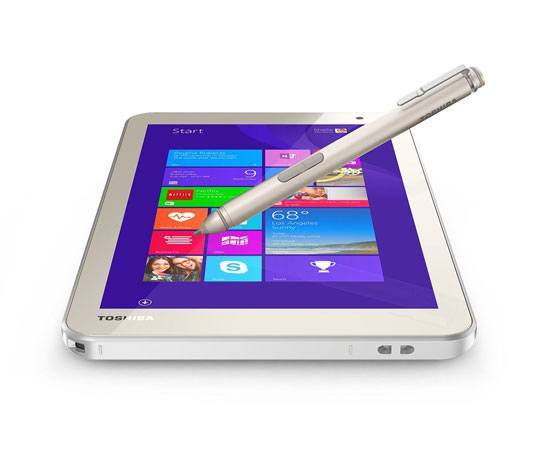
The battery-powered, fine-tipped metal pen feels solid in the hand, yet is not heavy. It looks like a ballpoint pen, or like the Surface Pen. It conveniently attaches to the side via a plastic pen loop.

The tablet feels solid and well-built and has an attractive, square-cornered design. The 3:2 aspect ratio, replicating the classical artist’s concept of the Golden Mean, is a positive for drawing.

Also, the TruPen for the Encore 2 Write is different from the TruPen for the dynaPad. You cannot use the TruPen on the dynaPad, according to Toshiba.

This tablet also won’t work with the pen from the Lenovo Thinkpad Yoga 14, which is also ES (I know someone will ask!) It may have limited use with other ES pens, but we recommend only using the TruPen.

Extra dynaPad pens are not yet for sale, but I expect they will be. It did take a little while for replacement pens to come out after this tablet’s predecessor, the Encore 2 Write, was released.


toshiba dynapad wacom

DRAWING ON THE DYNAPAD

The dynaPad comes with Toshiba’s TruNote, TruCapture, and TruRecorder, TruNote Clip and TruNote share apps. You can share handwriting in real time, and make screenshots. This suite of apps is made to integrate with Microsoft Office. (It does not come with Office; that must be purchased separately.) Collaborative projects with digital inking is growing, as designers, artists, and architects come up with new uses for it. (For a bit more info on Wacom’s role in this, see my CES post)

KEYBOARD

The keyboard is optional and attaches by magnets. fold the tablet over the keyboard to make it all one piece, thus protecting the screen. You cannot, however, adjust the angle of the tablet when it’s attached to the keyboard. The keys are deep and type comfortably. Toshiba has paid great attention to detail and user experience.

USER COMMENTS AND REVIEWS

Because this has just been released, there aren’t too many yet. One initial Toshiba dynaPad review praised it as being very comfortable to hold. The high-grade plastic casing’s rubberized texture, and the light weight of the tablet, provide this comfort.

PROS
generous 12″ size good for drawing
3:2 aspect ratio good for drawing
maximum pressure sensitivity
lightweight
well-made
metal, fine-tipped pen
Microsoft Signature Edition, less bloatware

CONS
Atom processor decent, but not like tablet PC
4GB memory not upgradeable
battery can’t be replaced by user
sound quality from speakers not that good

Microsoft Surface 3 vs. Toshiba dynaPad

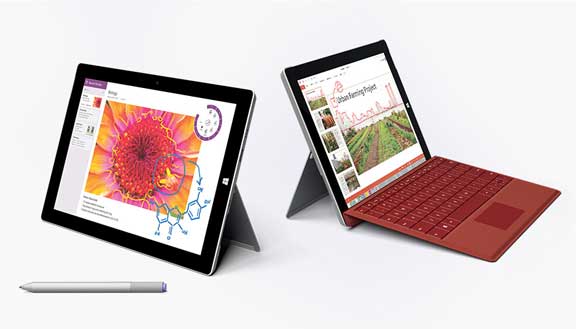
The Toshiba is a rival to the Microsoft Surface 3 (even though Microsoft had a hand in the Toshiba), which has an Atom X7 processor and comes with configurations of 2GB and 4GB RAM and 64 and 128GB flash storage. Both have fine-tipped pens and palm rejection works well. The specs are not that different. The main difference is really the digitizer.

Surface 3: 622g (tablet only); dimensions 10.52″ x 7.36″ x 0.34″; resolution also 1920×1280 HD

dynaPad: 576g (tablet only), 12″ screen

Surface 3 has an LTE option and more storage options. It has an N-trig pen that will give you 256 levels of pressure. The pen and keyboard are sold separately.

The dynaPad has a Wacom pen with 2,048 levels of pressure. If you order from Toshiba, the pen and keyboard are included. The Surface 3’s kickstand is adjustable but the dynaPad’s keyboard does not allow adjusting the position.

For art, I would pick the dynaPad over the Surface 3 because of the Wacom pen with more pressure levels. As well, handwriting feels more like writing on paper.

If LTE and/or an adjustable kickstand are important to you, you might want the Surface 3. That’s also good for drawing and note-taking, but I find the Surface pen drawing and writing to be less fluid.

iPad Pro vs. dynaPad

Tough comparison; the Apple Pencil is unique because you can draw with the side of the pencil “lead,” making it the most natural-feeling stylus, but I think it’s more important to be able to use full programs or full “middle” ones such as Photoshop Elements or Sketchbook Pro. The iPadPro has a powerful chip, but you’re still stuck only with art apps. If art apps are OK for you, then you might love the iPad Pro just for the Apple Pencil.

VERDICT

This is an exciting development and more power and pressure sensitivity than we usually see in a mobile device. It’s an excellent and forward-looking drawing tablet designed with both drawing and writing/business use in mind. The collaborative features open a new world, not one everyone needs, but you never know. The pen is responsive and the tablet has a generous screen size that’s like a sheet of regular paper. The prime benefits are quality and convenience, not the computing power, which is not that powerful. This is a great tote-around. This Toshiba dynaPad review is a thumbs-up.

See it at Microsoft
ACCESSORIES

Keyboard (Microsoft.com)

OTHER ACCESSORIES

If you’ve gotten a dynaPad and now need a carrying case and other accessories, there are some, such as this IVSO bag that comes in four colors, on Amazon.


End of Toshiba dynaPad review

See also Toshiba Encore 2 Write review

For a general introductory article and description of types of tablets, visit our homepage.

microsoft surface book review

Microsoft Surface Book Review: a laptop-first 2-in-1

Microsoft Surface Book Review: Solid laptop, detachable art tablet

by Tablets for Artistsmicrosoft surface book review


See it on Amazon.

See it at the Microsoft Store.

UPDATE: Many users have had a short battery life and other problems. Microsoft last issued and update on Dec. 2 and 17th,  but the power management has not been addressed. Their suggested workaround, is to not use sleep mode, where the battery drains, but rather hibernate. Windows Hello may be the core of the problem.. You can say good-bye to Hello by shutting it off in Settings> Accounts > Sign-in options.

UPDATE #2: Another firmware update has been released for the Surface Book and Surface Pro 4 on Jan. 27, 2016. This one is for Bluetooth, battery, and fingerprint sensor, but though the battery drain issue anecdotally is better, it’s still there. To see more about updates, check this page on Microsoft’s site.

Type of tablet

2-in-1 convertible

Specifications

Magnesium build, including keyboard
Windows 10 Pro
12.30” x 9.14” x 0.51 – 0.90” (312.3mm x 232.1mm x 13.0 – 22.8mm)
Screen: 13.5” PixelSense display
Resolution: 3000 x 2000 (267 PPI)
Aspect ratio: 3:2
1700:1 contrast ratio gives you deep blacks
10 point multi-touch
Two USB 3.0 ports
SD card reader
Surface Connect (an 80-pin connector)
Mini DisplayPort
Solid state drive (SSD) options: 128GB, 256GB, 512GB, or 1TB
5.0MP front-facing HD camera
8.0MP rear-facing camera
Dual microphones (front and back); Dolby speakers
Starting at 2.34 lbs. (1,516 grams) including keyboard base
Glass trackpad with 5-point multitouch
Backlit keys
Intel Iris processor on the i7
4.5 lbs. with keyboard, 1.6 lbs. for clipboard (tablet) only
Power and volume buttons on clipboard (tablet)

The camera on the Surface Book and Surface Pro 4 is compatible with the Hello Windows facial recognition software that lets you use your face instead of saying “Swordfish” (or typing in a password) The Book does not have a fingerprint reader, so you can’t log in that way; only the fingerprint-reader model of the Onyx SP4 Type Cover does.

Graphics

i5: Intel HD graphics 520
i5/i7: Custom NVIDIA GeForce Graphics Processor

The discrete graphics are in the keyboard case, so when you detach the keyboard, the Book will switch back to regular integrated graphics, which are strong enough to do most things, but if you are using 3D programs and the like, you would need to flip the screen over and keep the keyboard on.

What’s in the box

Surface Book and keyboard
Surface Pen
Quickstart guide
Safety/warranty documents

Screen

The Gorilla Glass display is super sharp, with 6 million pixels at 271 ppi (same ppi as in the slightly smaller Surface Pro 4, which has about 5 million pixels). Microsoft claims it will get the entire sRGB color gamut. The blacks are deep. The screen is 12.3 inches wide, and 13.4″ diagonally, with a small bezel. Its 3:2 aspect ratio is intentionally made to the proportions of a standard A4 sheet of paper. The screen is 21% larger than on the Surface Pro 4.

Portability

At about 3.4 lbs. including the keyboard and pen (pen weighs 21 g or about three-quarters of an ounce), it would start to feel heavy after carrying it around for a short time–maybe consider a rolling laptop case. The clipboard (tablet) without the keyboard weighs 1.6 lbs, quite light.

Battery Life

12 hours video with keyboard attached
3 hours with screen only (4 hours without video)

Microsoft says then when the lid is down, the battery will not drain.

To draw and get the longer battery life, you can remove the screen then flip it around and re-attach it to the keyboard so the screen is facing up. (see Update above for notes on widespread battery drain issues)

Call me Clipboard. Microsoft is calling the tablet part of the computer the “clipboard,” lest you forget to think of the Surface Book as a laptop. It’s first a laptop, second a tablet. Got it?

Good-bye, pen loop. The pen now snaps to either side of the clipboard via magnets.


The “dynamic fulcrum” hinge

microsoft surface book review 2

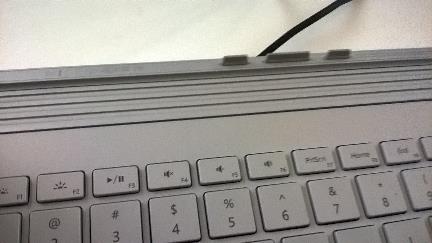
The innovative accordian-like hinge that Microsoft calls “dynamic fulcrum” gives a rounded edge, making it more comfortable to hold in your palm than a rectangular edge. When shut, there is a small gap between the keyboard base and screen. The hinge uses a wire dubbed “Muscle Wire” as part of the sinew that holds the two halves together. The hinge is strong and you can pick up the whole device by the keyboard or display. You can also open the Book to any angle. The Surface Book does not have the stand attached to the back that the Surface Pro line has, so if you want to prop up the tablet, er, clipboard, alone, you will have to use an exterior stand.

One Microsoft Surface Book review found that having the gap between the keyboard and clipboard was a problem when carrying it in a bag–dust and dirt would end up on the keyboard. So storing it in a laptop sleeve might be a good idea.

surface book muscle wire

Muscle Wire


surfacebookconnector


To detach the clipboard, you press a button on the keyboard. If you’re using the Nvidia graphics, which will cease to work once you take off the keyboard, you will see a notification.

surfacebookdetach

You hold down a key on the keyboard for a couple of seconds until you see this pop up. You will get another message when you have successfully attached it. The detaching/attaching process is not super simple.

Microsoft calls it a “continuum” when you take the clipboard off to continue using it.

Trackpad

surfacebooktrackpad

Surface Book trackpad

The large, glass trackpad with 5 touch points feels great on the fingers–it’s smooth and responsive, like skating on ice.

When in laptop mode, you cannot open up the whole thing flat the way you can with a regular clamshell laptop. So if you’re drawing, you either need to somehow draw with the clipboard up, or switch to tablet mode, which gives you no access to the keyboard. You can’t use the keyboard base unless it’s attached. So if you want to use keyboard shortcuts, you will need to use the on-screen keyboard, a USB or Bluetooth keyboard, or try some Photoshop actions.

Despite the Surface Pro being laptop-first, when in laptop mode the clipboard wobbles  a bit. The keyboard base and the tablet are roughly equal in weight, but it seems it would balance better were the screen considerably lighter than the keyboard. However, it isn’t too bad.

New Surface Pen

surface pen surface book

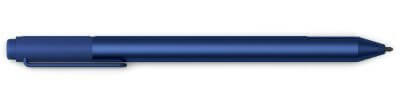
Blue Surface Pen. The one that comes with the Surface Book and Surface Pro 4 is silver.

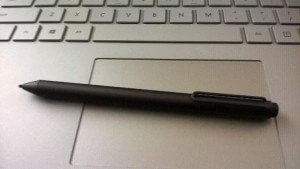
The new Surface Pen is a great improvement over the old. First of all, it now has 1,024 levels of pressure sensitivity (after Microsoft spent some time assuring us that 256 was fine and most of us agreed). It’s still N-trig (Microsoft has purchased the technology behind N-trig, so it’s here to stay, and it’s nice to see them improving it with artists in mind). There’s  now a cushiony eraser on the back. The pen has only one button now; the previous pen used one of the buttons to activate an eraser. You can click to open OneNote or double-click to take a screenshot and put the image into OneNote.

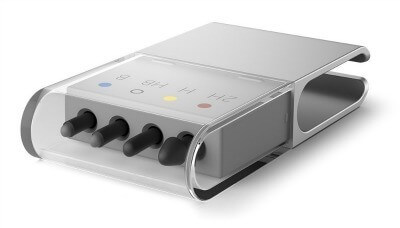
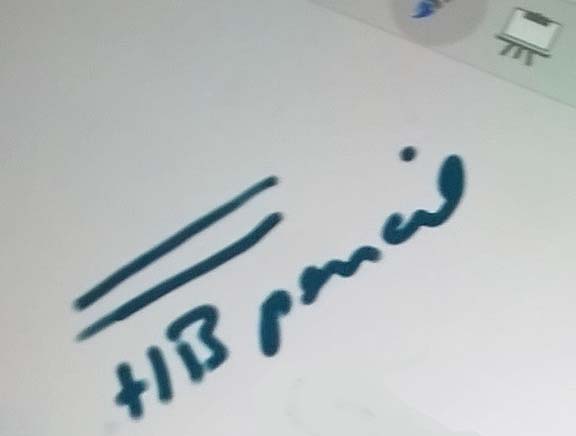
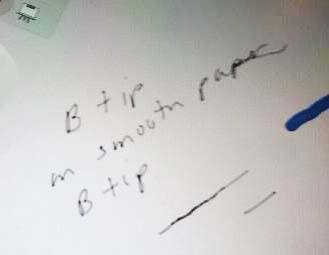
Best of all, the pen comes with 4 nibs, including artist pencil nibs of 2H, H, HB, and H, and a fine-point pen. HB is the preinstalled tip. The nibs have some friction, giving some tooth to the drawing experience so it feels more like paper. The old pens did not come with extra nibs, the nibs didn’t last long, and there was no way to replace them; you had to buy a new pen. The pen takes one AAAA battery. Microsoft says this pen will have reduced latency (less lag). Testing it, it still has some lag, perhaps a bit less than the SP3. The pen has a solid heft to it.


surface pen nib kit

Pen tip kit

Because of the replaceable nibs, this new pen should last much longer; it’s more economical and less wasteful. If your nibs wear out or get lost, you can buy an extra nib kit. It’s backward-compatible with the Surface Pro 3 (with which you would still get 256 levels of pressure sensitivity) and will also work with the Surface Pro 4 (which gives you the full 1,024 levels). Microsoft claims the pen has a full year of battery life. The pen barrel comes in five colors– charcoal, blue, red, silver and gold. The Surface Book and Surface Pro 4 come with the pen, but not the nib kit, which is inexpensive. If you buy an additional pen, that pen will come with the nib kit.

Surface Pen nib test

surfacepenhbnib

HB pencil on smooth canvas in Fresh Paint

surfacepennib

B tip on smooth canvas in Fresh Paint

surfacepro4pencil

B tip on rough canvas in Fresh Paint

The B tip does look more like a pencil line. You can choose a brush that says, say, 4H and still use the 2B pencil, which I find a little hard to wrap my mind around. Every brush you choose will look a bit different with the different nibs.

Writing with the Surface Pen is not bad, but isn’t quite as natural as on paper–harder than with Wacom, but easier than using an iPad with a basic capacitive stylus.

When using the eraser tip, the eraser size doesn’t adjust in OneNote, it wipes out a large area, but in art programs it’s adjustable.
The issue with slowly-drawn diagonal lines being wavy is still there, and it’s just a function of the digitizer and the rate at which it “polls” the data. There are some ways to fix it, such as using Lazy Nezumi or a line smoother such as in Manga Studio. Or just draw lines more quickly. There is a definite and palpable improvement with the new pen and increased pressure levels. To me, N-trig is still not as satisfying as Wacom to draw with but it’s not because of the jitter. However, many artists really like N-trig. It’s best to try it out. The Surface Book is an ambitious concept and I hope we see more laptop-first tablet PCs with detachable tablets as these are ideal for drawing.

Surface Dock

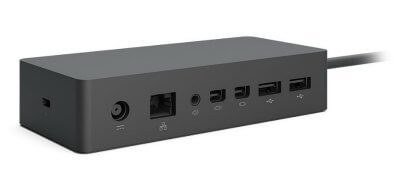
surface dock for surface book

The Surface Dock doesn’t come with the Surface Book or any computer. It’s not necessary for everyone, but is useful. It sports two 4K-capable DisplayPort outputs and four USB 3.0 ports. It also has an Ethernet port, which the Book itself lacks.  The dock is compatible with the Surface Pro 3, Surface Pro 4, and Surface Book. (There’s a different dock that works with the SP 1 and 2.)

Pros

fast (Microsoft claims that with the discrete graphics, it’s effectively twice as fast as the MacBook Pro)
improved pen
larger screen
wide color gamut
1700:1 contrast ratio gives deep blacks
very high-resolution display (267 ppi vs. MacBook Pro’s 232)

Cons

pricey
heavy with keyboard attached
a bit top-heavy
dirt can get onto keyboard when closed due to gap (suggest keeping it in a sleeve)

The Verdict

This is a powerful computer, though it has been marred by some battery-charging issues.  you’re trying to decide between this and the Surface Pro 4 and primarily want it for drawing, you would probably be fine with the Surface Pro 4, which has an improved keyboard. The i5 Surface Pro 4 is considerably cheaper than the i5 Surface Book.

If you want a more solid keyboard, a larger drawing surface, or if the discrete graphics are important to you, then the Surface Book would be the way to go. It also is just nice-looking. It certainly could be a solution to the artist who wants a laptop too.

If you’re interested in the history of PixelSense tech, here it is on Wikipedia.

See more Microsoft Surface Book reviews, price, and info on Amazon

https://www.youtube.com/watch?v=XVfOe5mFbAE

End of Microsoft Surface Book Review

See our Microsoft Surface Pro 4 review.


yoga 14 screen

Lenovo ThinkPad Yoga 14 review: a twist of Wacom ES

Lenovo ThinkPad Yoga 14 Review

by Tablets for Artists

Update, Spring 2016: There is a newer version, the 20FY0002US.  I have written a separate review of it you can read here. Click to see it at Amazon. This newer one doesn’t have the battery issues some of the units from the earlier model did, and this one comes with the Wacom ES pen in a silo in the body. Recommended.
icon

Type of Tablet

Convertible Tablet PC (Laptop that turns into a tablet via a hinge. Keyboard is not detachable).

The rumored 15″ version that works with the pen never happened.

UPDATE: This computer in Windows 10 is now available at Best Buy.

NOTE: There are several versions of the Yoga ThinkPad 14 and some do not have the Wacom digitizer. The ones that do are: the 20DM008UUS, which has Windows 8.1, and the 20DM009GUS with Windows 10. It is confusing, the salespeople aren’t informed, and the info doesn’t appear in the product info. 

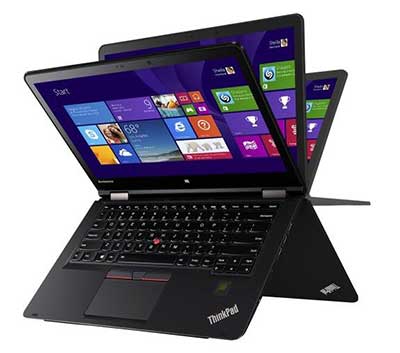
lenovo thinkpad yoga 14 review

Lenovo ThinkPad Yoga 14


Overview

The computer, made of magnesium alloy with a plastic keyboard, is solid and good-looking, as well as slim. The display is bright and clear with deep colors. The hinge works well in all the positions. The trackpad is large and responds well. The extra screen space is a great addition for drawing. The ThinkPad Yoga 12 weighed 3.5 lbs., and the 14 weighs in at 4.2 lbs. The 12 actually had a brighter screen at 324 nits, but to me it did not look as bright, maybe because the 14 has a smudge-and-fingerprint-resistant coating that adds to the glossy sheen, whereas the 12 was matte. Glossy as it is, the surface is not too slippery for drawing, though I prefer drawing on the matte. So there is a tradeoff here between brightness and texture.

It boots up and shuts down quickly. Programs open quickly, too. There is just a single slot of RAM, and the 8GB is not expandable. But 8GB is plenty to run Adobe CC and other graphics programs. Bootup and shutdown are quick.

thinkpad yoga 14 opens flat

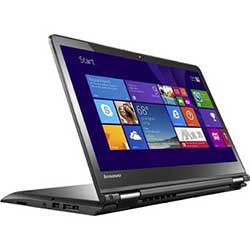
The Yoga 14 can open to a flat position, so you could draw on it like this and keep access to the keyboard.

lenovoyoga14tabletmode

Or you can push the screen down so it’s flat, with the keyboard on the bottom. Keys will be locked, so it’s helpful to use an external keyboard to access keyboard shortcuts.


Features

IPS display with 10-point multitouch, screen size 14″
Screen resolution 1920 x 1080 (Full HD)
brightness: 267 nits
1 TB hybrid hard drive with 16GB solid state drive
360-degree design to fold into 5 settings: laptop, tablet, tent, table, stand
Intel 4th Generation Core i5-4210U processor
8 GB RAM, non-expandable, soldered in (possibly could be expanded with some difficulty)
NVIDIA GeForce GTX 840M graphics that will switch on automatically when you open a program that uses it (or you can change options in the NVIDIA settings)
720p Webcam
keys that retract when in tablet mode
backlit keyboard (user turns on backlighting when wanted)
Dolby Home Theater audio

Height: 0.8″
Width: 13.3″
Depth: 9.4
Weight: 4.2 lbs.

3 USB ports: two 3.0 and one 2.0
No Ethernet port
1 full HDMI output

What’s in the Box

Thinkpad Yoga 14 2-in-1 14″ Touch-Screen Laptop
4-cell lithium-polymer battery
Power cord, AC adapter
Owner’s manual

Durability

The Lenovo Thinkpad Yoga 14 has military-grade protection for shock, vibration, sand and dust. The computer is solid and should be a brawny travel companion.

Portability

The PC’s weight, while light for its size, it’s a lot to tote around for long periods of time.

Wacom ES Digitizer

The 14 uses Wacom ES, which is sort of like a marriage between Wacom EMR and N-trig. The pen takes batteries. The ThinkPad Yoga 12 uses traditional Wacom EMR technology, so you could use a regular Wacom pen such as the type you use for the original Surface Pro and Surface Pro 2, and attain 1,024 levels of pressure sensitivity. You cannot use that kind of pen with the 14.

Wacom ES feels somewhere in between N-trig and traditional Wacom EMR. It has the 2,048 levels of pressure sensitivity of Wacom, with the better edge accuracy of N-trig. It’s the same tech used in the Toshiba Encore 2 Write. (That does not mean that all the pens will work on all of them.) The drawing/painting experience won’t be quite as fluid as Wacom EMR, but it requires less initial activation force (amount you have to press down to get a mark) than the Surface Pro 3, which is N-Trig, so you won’t have to worry about having to press hard. ES (also called AES) tends to have a lower hover distance.

If you go to see this computer and want to see that it actually has Wacom, simply type the word Wacom into the Windows search box and the Wacom settings will pop up in the search results.

Pen

To get pressure sensitivity, you must use the ThinkPad Active Capacitive Pen, also called the Lenovo ThinkPad Pen Pro. (Since this is multitouch, you can use any old capacitive stylus–such as for the iPad–on this, but with no pressure sensitivity).

thinkpad active capacitive-pen

Here’s the pen on Amazon.

The pen takes an AAAA battery. It has two programmable buttons. It also has a holder that attaches to the laptop via a USB port.

On Amazon and other sites, there is something called the Lenovo ThinkPad Active Digitizer Pen. Do not buy that. That is a traditional Wacom pen and will work on the ThinkPad Yoga 12 2-in 1, but not on the 14. The name is very confusing. To make things even more confusing, there is an earlier version of the 14 that has no active digitizer. So be sure you are getting this 2nd-generation model. There is also a Yoga 15 without the digitizer. Best Buy and Lenovo are not much help with providing info on what pen goes with what. The Lenovo Web site contains very little info. Lenovo’s Helix pens will also not work on the ThinkPad Yoga 14.

Drawing on the ThinkPad Yoga 14

Wacom ES is not too big of a compromise from traditional Wacom. If you’d rather have an all-in-one than a Cintiq13, and a Cintiq Companion isn’t affordable or what you want, and you want something larger than most options, this is a reasonable choice as far as drawing.  The 8GB of RAM lets you easily multitask and use Adobe Photoshop and all the CC programs. In Photoshop CC, you can select to run the NVIDIA dedicated graphics GPU (watch the video below)–actually, it will go on by itself but some people choose to control the settings more.

The Lenovo’s screen is bright, and images look crisp. Using keyboard shortcuts on the Yoga 14 is tricky because the keys retract once out of laptop mode so you’d have to unfold the tablet or use the on-screen keyboard, or, better, use a Bluetooth keyboard. In Photoshop CC, you can create Photoshop Actions to avoid keyboard commands.


https://www.youtube.com/watch?v=_8eUW6N2wK8

Watch this video to see a drawing demonstration, and see how to run the dedicated NVidia graphics GPU in Photoshop CC for better performance.

As far as typing, the keyboard is comfortable and well-made, and the ThinkPad little red button nested in the keys can be used as a pointer. The trackpad is large and has buttons on it than can be used as selection and right-click tools.

Screen

The 1080 IPS High Definition screen is bright and cheery with excellent viewing angles, good contrast and a smudge-and-fingerprint antiglare coating. It’s glossy, but not too slippery to draw on. The colors are rich and contrast is deep.

The Dolby sound can get very loud, but it has a bit of tinniness.

As you can see, the screen is pretty glossy and bright. Photodon.com has screen protectors especially made for this computer. You can try one that’s not too matte, such as the 25% anti-glare one, to preserve image sharpness.

Here you can verify that it has a Wacom driver–when in doubt, just type Wacom into the search box.

yoga 14 screen

Battery life

around 6.5 hours

The battery life is a good 90 mins. less than the ThinkPad Yoga 12s.

Battery issues

There are serious concerns with the battery beyond that it doesn’t last a full workday. Many users had battery problems, causing inconsistent brightness, power drain, and random shutdowns. The Lenovo forums contain a long thread by stressed-out users. One person figured out the issue and the fix, but it’s not something everyone can do themselves, plus the method may void the warranty. These complaints are not showing up a lot in the Lenovo Yoga ThinkPad 14 reviews so far, so I don’t think this is incredibly widespread, but it’s hard to say because the release of this model is relatively recent as of this writing. Lenovo is aware of it and perhaps they will do something about it. We will follow the issue and add updates. A couple of commenters here and elsewhere have said that they got ones with no problems and really like them. Still, pay close attention to any return policies.

Tip: disable adaptive brightness and power management to get more consistent brightness.


Pros

fast processor
dedicated graphics
2,048 levels of pressure sensitivity with pen
great display
nice keyboard
large screen

Cons

glossiness of screen not ideal for drawing
have to buy pen separately, lack of information from dealers
not as fluid as traditional Wacom
battery life of 6.5 hours relatively short
weight of 4.2 lbs. hefty to carry
risk of getting one with bad battery


User reviews

Many people are really happy with the Yoga 14 because it’s fast, the pressure sensitivity works well, and it can run Photoshop and other programs breezily. One Lenovo ThinkPad Yoga 14 review described it as “amazing.”

This is it in tent “pose”:

<lenovoyoga14review2


The Verdict

This laptop is a very good choice for an artist, if you get one without the battery issues. So it’s hard to give a clear recommendation in this Lenovo ThinkPad Yoga 14 review, because as an art tablet it’s pretty great, so it gets a qualified “Namaste” (recommendation). If you feel life’s about taking risks, it may be worth it. The ThinkPad Yoga 12 (also called the ThinkPad Yoga 2 in 1) has a smaller, 12.5″ screen, but these battery issues haven’t been reported and it has traditional Wacom. As far as the 14, the price is great for the features it offers.

NEWER VERSION WITH WINDOWS 10
BUY ON AMAZON — The one for sale on Amazon is model 20DM000VUS, which is the Windows 8.1 version. You can easily upgrade for free to Windows 10. As with all the models of this computer, it does not come with the pen, you have to order the pen from the link right below.
See more info/buy the Lenovo Active Capacitive Pen here (Lenovo).
Read our review of the ThinkPad Yoga 2-in-1 (ThinkPad Yoga 12)
See the ThinkPad Yoga 12 on Amazon (same as ThinkPad Yoga 2 in 1. The 12 is an informal name to distinguish it from the 14).
 The Yoga 14 works with Lenovo’s OneLink and OneLink Pro docks.
lenovothinkpaddock


Lenovo ThinkPad One Link Pro Dock (pictured) (Amazon)

Lenovo ThinkPad Pro Dock


end of Lenovo ThinkPad Yoga 14 review

Read review of the newer version of the TP Yoga 14.


Microsoft Surface 3 review: Windows, pen pressure in an affordable tablet

microsoft surface 3 review

Microsoft Surface 3

Microsoft Surface 3 review: we’re not in RT-land anymore

by Tablets for Artists

Type of tablet

Slate PC with detachable keyboard

Features

Windows 8.1 (64-bit), with free upgrade to Windows 10 when that becomes available

Intel Atom Quadcore x7 processor

Multitouch screen takes finger or pen input

N-trig digitizer with 256 levels of pressure sensitivity

Palm rejection

64 and 128 GB options

full-size USB port

mini USB charging port

takes microSD cards of up to 18 GB

less expensive than Surface Pros

One year of Office 365

Nice design and solid build

Surface Pen with eraser button (not included). Pen takes AAAA battery

Detachable, click-in keyboard (not included)

Bluetooth

Dock (not included)

Can connnect to most TVs and Monitors using  Mini DisplayPort or Microsoft Wireless Display Adapter

Ambient light sensor and more


What’s Included:

Tablet, charger (only works with the Surface 3), documentation, Quickstart guide

Microsoft touts the Surface 3 as being a rival to the iPad, because of its light weight, 3:2 aspect ratio, and comparable price; as a potential laptop replacement, it does much more than an iPad. It certainly could take the place of an iPad in terms of what it does, and it does far more than the iPad; if all you need is the functions of an iPad, then you may be happier with one. I see the S3 as a lower-cost rival to the more premium Surface Pro 3 because the S3 has almost the same features, including pressure sensitivity. So this Microsoft Surface Pro review will focus on the comparison with the SP3 rather than an iPad, because many artists are simply looking for an affordable drawing tablet with a screen and stylus and pressure sensitivity.

It’s far better than the now-discontinued Surface RT line, which had no pressure sensitivity and an irritating operating system.  If you want something that can also act as a laptop and art tablet, the Surface 3 is good deal. It has apps such as Netflix and iTunes, or you can use your browser to watch Netflix and you can run desktop iTunes.

This is the first computer to run the Intel Quadcore Atom X7, which as as powerful as an i3. You can run any Windows 8.1 program on the Surface 3. The X7 is made to run cool. It will handle Photoshop well.

The 3:2 aspect ratio is that of a sheet of paper. The Surface and Surface Pros 1 and 2, Samsung Ativ, and some other Windows slates have a wide screen. The 3:2 feels more natural hold and to draw on, and fits drawings such as comics better. It’s the same aspect ratio as the Surface Pro 3.

Surface 3 vs. Surface Pro 3

Surface 3Surface Pro 3
OS Windows 8.1Windows 8.1
Screen size


10.8"12"
Aspect ratio3:23:2
Resolution1920 x 1280 full HD Plus2160 x 1440
Weight1.37 lbs.1.76 lbs.
Dimensions10.52" x 7.36" x 0.34"11.5” x 7.93” x 0.36”
Thickness .034".036"
ProcessorQuadcore Intel Atom x74th Generation Intel Core i3,i5, or i7
Pressure Sensitivity256 levels (N-trig)256 levels (N-trig)
Battery lifeup to 10 hrs. of video playbackup to 9 hours of Web browsing

The SP kickstand takes only 3 positions, making it less flexible than the SP3, but also adding less weight and cost.

Storage options are 64 and 128GB, the 128GB is definitely better for art, since art programs and files can take up so much memory, and Windows also takes a lot of memory.

The S3 has an optional detachable keyboard with buttons.

For lefties

You can actually set left or right-handedness by swiping from the right of the screen and writing the word “hand” (without quotation marks) in Search. A result will pop up asking you to specify the hand you write with, so you tap or click.

The pen that comes with the Surface 3 is the same as the Surface Pro 3 pen.

N-trig digitizer

The N-trig 3 is good for drawing, though you do have to press harder, exerting a higher initial activation force to get a line and the line can be a bit skippy if you don’t maintain the force. It’s something you can get used to There is no line jagging around the edges of the tablet as there are with Wacom digitizers. Microsoft consulted with some digital artists when creating the N-trig interface. Some people don’t like drawing on the N-trig, and others do. It’s good to test it out in person before committing. If you want a similar computer with a Wacom digitizer, which some prefer as it feels a bit smoother, you can still get a Surface Pro 2 or Surface Pro 1.

Pen

microsoft-surface-3-review-surface-pen


Surface Pen

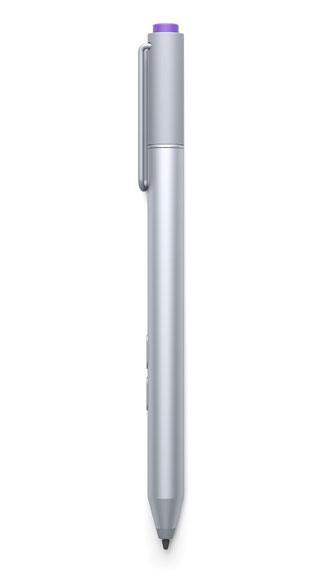
The Surface Pen is solid and metal, and handles nicely. It takes a single AAA battery. You will have to pair the pen to the tablet via Bluetooth when you first get it, but only once. You can pair it automatically at setup, or do it manually later.

The pen resembles a metal ballpoint pen and produces a fine line. The barrel comes in 4 colors. It works with art programs in addition to apps that support Microsoft’s Ink, such as Word, PowerPoint, and OneNote.

The pen has three buttons. The top button connects to the SP3 via Bluetooth. Single-clicking the top button will open OneNote, and double-clicking will take a screenshot.

On the barrel are two more buttons. The one farther from the tip is the Right-Click button. That one can open a pen menu where you can choose an ink color for OneNote, or select text.

The button nearest the tip is the eraser button.

Note: The Surface Pen works with the Surface 3 and the Surface Pro 3. It is included with the Surface Pro 3, but not with the Surface 3.

You cannot use a pen from the Surface Pro or Surface Pro 2 with the Surface 3 or Surface Pro 3. The SP1 and SP2 use the Pro Pen.

Drawing on the Surface 3

The screen is responsive and nice to draw on. When drawing, you don’t get jitter around the edges as happens with Wacom devices. However, there is a different problem specific to N-trig, which is that when drawing a diagonal line slowly, you get a jagged line. This is because the N-trig digitizer is arranged on a grid. Microsoft is aware of this problem and attempted to make the pen connection more powerful in the 3, but the problem continues. In testing the N-trig, I got this problem some of the time, depending on what strokes I was drawing. Here are some possible fixes:

-Draw a straight line, select the line, and rotate it.

-Use Manga Studio, which has line smoothing and fixes the issue.

-Use Lazy Nezumi, an app that gives you line smoothing. It has a Photoshop plugin, or you can do it canvas by canvas in other programs. It has a 30-day free trial, and is fairly affordable to buy.

-The Surface Pro or Surface Pro 2 have Wacom digitizers so would not have the jagged line issue (but do have edge jitter).

Customer ratings and reviews

Mostly very positive, with some complaints of defective tablets. One Microsoft Surface 3 review described it as being great for students, while another praised it for business and giving client presentations. As an artist, you could show your portfolio on it. So it’s a good all-in-one. As a tablet it’s very portable, and adding a keyboard gives you a functioning laptop.


The Verdict

The Surface 3 is arguably the best art tablet with screen that you can get for this price. You will not be able to get tilt sensitivity the way you can on the more expensive Wacom Intuos and Cintiq. There is not a variety of pens available as there is with Wacom devices. Professional artists who use Adobe CC and a lot of memory would do better to get a Surface Pro with its more powerful processor.

With the Surface 3, you will have pressure sensitivity, a desirable aspect ratio, lots of computing power (not quite as much as with the Surface Pro 3) and the ability to do anything a Windows laptop can do. You can run Metro Apps such as Fresh Paint and the Sketchbook Express app, or full Adobe programs and full Sketchbook Pro or Manga Studio, games, and Word. It seems that pressure sensitivity is becoming much more common in tablets. As for the diagonal-line problem, not everyone seems to have it, but if you do, try one of the solutions above. This is an annoying problem and may turn you off of the Surface 3 as an art tablet.

When preparing this Microsoft Surface 3 review post, I expected to make more of a comparison to an iPad, but in studying the specs, that comparison doesn’t quite make sense. As far as a buying choice, though, you are getting more for your money as an art tablet and a computer than with an iPad, but that doesn’t take away from what the iPad does offer, which is the Mac OS and breezy design. The Surface 3 has a nice design too.

Because the screen is not quite as large and the processor not quite as powerful, we still favor the Surface Pro line for professional digital artists, but if you’re on a budget, you can be very productive with the Surface 3. It’s not limited to use as a digital sketchbook; it goes beyond that. It’s also a good general-use device.

see it on Amazon

Optional Accessories for Surface 3

Surface Pen

Keyboard

Dock

Case


end of Microsoft Surface 3 review

Want to learn more about the different types of art tablets? Read our introductory article.

Toshiba Encore 2 Write review: a Wacom-powered sketchbook

Toshiba Encore 2 Write Review: affordable Wacom tech

by Tablets for Artists


toshiba-encore-2-write-review

Toshiba Encore 2 Write. See it on Amazon.

Type of Tablet

Windows 8.1 tablet with digitizer pen

About the Encore 2 Write

If Toshiba’s new Encore 2 Write is the shape of things to come, then this is an encouraging time to be a digital artist. The Encore 2 Write was featured at the 2015 Consumer Electronics Show (CES),  an annual international convention held in Las Vegas that showcases the latest in gadgety innovations.

This tablet’s price point and features are comparable to the Asus Vivotab (read our review), which is no longer being manufactured. The Write is newer and has received more favorable reviews than the Vivotab. Like the Vivotab, it’s a portable tablet that runs full Windows 8.1 and has a Wacom digitizer. While the Vivotab gave you 1,024 levels of pressure sensitivity, the Encore 2 gives you the maximum, 2,048. The VivoTab only had a thin pen, but the Write has a full-size pen; the tablet does not have a slot to old it. Unlike Wacom pens for the Cintiq and Intuos tablets, the Encore 2 Write’s stylus takes a battery, size AAAA. The battery should last a few months with regular usage. It has two hi-res cameras and dual mics.

Specs

Intel Atom Z3735F processor
Windows 8.1
micro-USB port
16:10 aspect ratio
2GB RAM
64 GB storage
dual mics
two hi-res cameras
active Wacom digitizer with 2,048 levels of pressure sensitivity
comes in 8″ or 10″ screen
Dimensions: 6.9 x 10.2 x .35″
screen resolution 1280 x 800
Micro SD slot takes up to 128GB Micro SD storage, tablet
supports MSDXC standard
Bluetooth-enabled
GPS
HDMI video out
Pen does not have removeable nibs.

What’s Included

The tablet, pen (called Trupen) with lanyard

One-year subscription to Office 365™ Personal plus unlimited OneDrive storage (subject to change)

Charger

Reset pin


Features

The digitizer is not EMR (electromagnetic radiation) like a Cintiq. Instead, it is called “Active ES” (electrostatic) digitizer, which makes for a lighter tablet, as an EMR tablet requires a separate layer. The ES is a capacitive digitizer that is in front of the LCD screen. It’s somewhat like the N-Trig, and the metal pen that resembles a ballpoint pen also has the feel and look of the N-Trig pen. The screen is touch-screen and you could use it without the pen.

Though the Encore 2  does not currently support Wacom’s Wintab Feel It driver, which allows you to get pressure sensitivity in all the art apps that support it as well as map the pen,Wacom has unofficially said it will be getting this valuable feature. The Surface Pro 3 with its N-trig “dual sense” does not have this feature. The ES digitizers could in the future be the norm for lower cost (under $1,000), more portable, lighter-weight tablets.

Drawing on the Encore 2

With some programs  you will get an initial blob, as with the Surface Pro 3, as the tablet decides whether you are touching it with a finger or pen. The pressure curve is very good. The hover is a bit higher than on the Surface Pro 3, so it might seem like the palm recognition isn’t quite as good, but it works. The “hover tracking” is better, so there is less parallax with this than the Surface Pro 3. According to the video below, shot at CES, the initial activation force (geekspeak for how hard you have to press on it) is a light 3 grams. The line does not get jittery around the edges as it would in a Cintiq or the Vivotab. Both the N-trig and ES are fine even right near the edges. The pen provides some “bite” which gives a paperlike feel.

Screen

The screen resolution is not that high, but for this price you would not expect it to be.


Pen

toshiba-encore-2-write-review-pen

The metal TruPen is fine-tipped, “pro grade,” and takes a AAAA battery. The eraser is a button on the side. The palm rejection kicks in when the pen is hovering at about 3/8″ above the screen.


Software

Windows 10 will allow desktop apps on tablets 8″ or over. You can run desktop apps on this, since it’s a full Windows tablet, but it’s a little hard to use Photoshop since the tablet is small. As well, since it is an Atom processor, doing serious digital painting in Photoshop could be laggy, though basic image editing is OK. What will work best are apps such as Fresh Paint and the Sketchbook Express app, which are optimized for a tablet. One user who wrote an Encore 2 Write review praised using Manga Studio (desktop) with this, so by all means, try it.

The tablet is centered around note-taking. It comes with the preinstalled apps TruNote, TruCapture, and TruRecord. TruNote lets you take and organize handwritten notes, TruCapture is to take hi-res photos of text in books or from a blackboard, chalkboard, or whiteboard and do OCR, and TruRecord lets you record sound. There is an organizing and tagging system, kind of like Evernote. So you can not only draw on it, but use it as a multimedia creative diary.

Microsoft Office and OneNote work fine with this tablet.


Portability

It’s super slim at .04″ thick, and easy to carry at 13.4 oz. for the 8″ model and 1.2 lbs. for the 10″ model.


User reviews

Many people enthusiastically recommend this tablet as a digital sketchbook. One Encore 2 Write review praised its ability to work with Manga Studio. The high-res cameras, dual mics, and other features add appeal.


Pros

relatively affordable art tablet with screen
portable, lightweight
cameras do OK in low light
Pen and tablet are both fast and responsive


Cons

The screen resolution is not that high.
Atom processor works pretty well, but is not as fast as a full computer when you run graphics-heavy full Windows programs.
Cannot access battery.

Customer Service

I found them pleasant and professional when I did a chat to ask questions. If you happen to get a faulty one, Toshiba or Amazon will send you a new tablet.


The Verdict

This is an exciting development in tablets. It would be great if there were one that was a little larger. But this is a great portable sketchbook with pressure sensitivity that allows you to run both desktop and Metro apps. You can also use OneNote, play games, watch videos, and use a Bluetooth keyboard. I don’t see it as quite a Cintiq replacement, because of the size and there is not as much memory as with a full computer, so large programs such as Photoshop would not be ideal, though you could run Photoshop to an extent. For artists, this is overall better than an Android tablet or iPad because of the digitizer and ability to run desktop programs. It doesn’t have the great screen resolution of an iPad, but is more of a productivity tool.


Optional Accessories


iLLumiShield – Toshiba Encore 2 Write 8 Screen Protector

Cooper Cases Encore 2 Write Folio Case with Bluetooth Keyboard 

More Encore 2 Write opinions, price, and info on Amazon

https://www.youtube.com/watch?v=tO4nC83U6NY


End of Toshiba Encore 2 Write Review


Consumer Electronics Show, Wikipedia

official CES site