Category Archives: Articles

Informational articles on various topics related to art tablets and digital art, tech news, and more.

iPad Pro 2 slated for 2016 or 2017

iPad Pro 2 in the pipeline

https://www.youtube.com/watch?v=kfOFPRZS1Vw

Time flies when you’re having fun!

As if I didn’t feel old enough already, the iPad Pro 2 is already in the rumor mill. Those in the know say it may be announced or even launched in Fall 2016–remember, the 9.7-inch iPad Pro just came out in March 2016. It’s more likely that said iPad Pro 2 will come out in the spring of 2017.

(This concept video was NOT made by Apple, but by someone just guessing that the new device will have stuff like up to 1TB memory and different colors of Apple Pencil. Nice thought. But we really don’t know.)

True Tone display

Likely, the iPad Pro 2 (if it follows Apple’s naming traditions, that’s what it would be called) will have the True Tone display that’s already in the 9.7″ version. True Tone is an adaptive display that adjusts white balance, making it easier to read text in different lighting as well as easier to see the screen in sunlight.

The iPad Pro 9.7″ has a wide color gamut with extreme color accuracy. The 12.9″  iPad Pro display is nearly as good, but not quite, and doesn’t now have, nor support, True Tone. (I still favor the larger size for drawing in spite of this, but am hoping the iPad Pro 2 will let us have our True Tone and eat it too).

Drawing on iPad Pro with Apple Pencil

Drawing on iPad Pro with Apple Pencil, Sketchbook Pro app

3D Touch

The iPad Pro does not have 3D touch, though iPhone 6S and 6S Plus already have it. So there’s a good chance Apple will add it to the iPad Pro 2, just to give us something to look forward to.

3D touch is a sensor in the touch screen that will cause different things to happen depending how hard you press on the screen. This works differently in different apps–for instance, you might tap lightly to see a photo but harder to open the photo app.


It would be nice if instead of 32GB, 128G was the base model, or at least 64GB. 32GB is not enough for most consumers; maybe it’s aimed at workplaces where employees don’t add a lot of apps or files.

If you’re interested, here’s a writeup on Ars Technica on the beta version of iOS 10.

Somehow I doubt Apple will add an SD card slot, but a girl can dream.

whatfiletypeimages

Best image file types for Web and print

What file type should I use? Best file types for print and Web

best file type for web and print

Whether you’re creating digital art, scanning or editing digital files of traditional art, or working with digital photos, you may have questions about the best file type for Web and print. File types are associated with certain types of images and software used to create and edit them. This introductory article will show you the basics of image-file types.

A file extension is the two-to-four letter abbreviation at the end of a file. It’s preceded by a period: JPG (or .JPEG), .PDF, etc. Many programs allow you to save, export, and open various file extensions.

Best file type for Web

JPG is the best file type for Web use. If your drawing or photo is only for online display, save it as a 72ppi (or dpi) JPG.

PPI stands for pixels per inch. (dpi is dots per inch and has to do with printing, but “ppi” and “dpi” are often used interchangeably).

A JPG (pronounced jay-peg) can be opened and edited in most image-editing programs, such as Photoshop, Gimp, and Sketchbook. It is flat and cannot have layers or transparent areas.

A JPG is made of pixels. It’s a raster file. It can support 16.8 million colors, making it the best file type for Web display of images that have gradations of color, such as photographs and illustrations.

Saving and exporting/importing JPG files

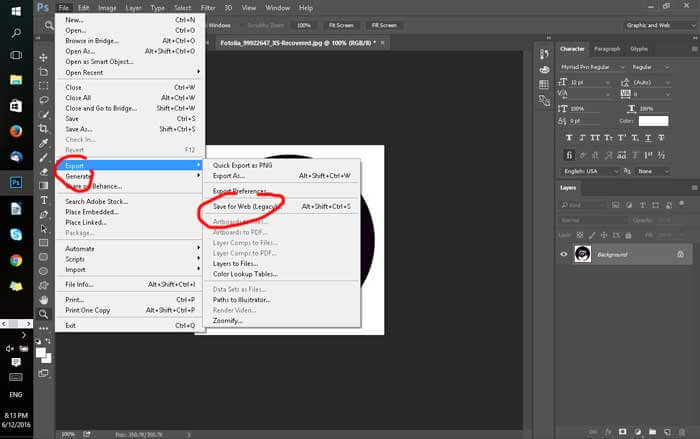
If you’re using Photoshop and saving a JPG file to use online, use Save for Web. You’ll have to do that by hitting Export/Save for Web. That makes the file size much smaller. If you don’t have Photoshop, you can use free sites that do something similar, such as tinypng.com, which is for PNGs and JPGs.

If you reopen that saved for Web file in Photoshop, it will reopen at the resolution you saved before choosing Save for Web.

Note that Save for Web is marked as “legacy,” meaning Adobe may replace it with something else.

saveforwebphotoshop

Creating and saving images for print

For print, 300 ppi (dpi) is the best size for creating and saving most image files. It’s high-resolution enough to print well, but not so huge it will slow down your program.

Do not try to upsize a small file to a larger size. Doing so will result in a pixelated (fuzzy, blurred) image.

JPGs are “lossy” and saving as a JPG causes data loss. For printing with zero loss in image quality, save as TIFF.

In some situations, a printer may ask you to use a JPG. For instance, some print-on demand-sites, which allow you to upload your work to sell on products that get digitally printed will ask for a JPG because the sites have a file-size limit. JPGs are smaller than TIFFs. Each site will specify its requirements.

If you created your file with layers, save the PSD so you can make further edits to each layer. Then flatten it and make it 72ppi before hitting Save for Web. You now will have two files, one ending in JPG, one ending in PSD. You can change the file names if you wish.

PNG and GIF files

PNG and GIF files are types of low-resolution files also used online. GIF files can only have 256 colors maximum. PNGs do not have that limitation (except PNG-8 does).. Only PNG-16 and PNG-24 allow for fully transparent areas.

The correct way to say GIF is a topic of intense, good-humored debate. The inventor of the image type prefers to say it as “jif,” not “gif” with a hard G.

GIFs are best for continuous-tone images, such as clip art or text. Both GIFs and PNGs can have transparent areas. GIFs are often used in simple animations.

jpg file savedforweb

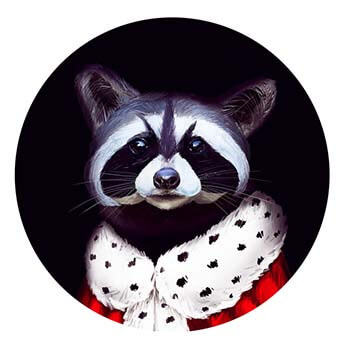
RACCOON by Ivan Pskov. Saved as JPG

image saved as GIF

Same image saved as GIF with 256 colors. Notice that some colors aren’t showing.

in Photoshop, the resolution will change, leaving you with the same file size.

EPS (vector) files

EPS files are for vector graphics, which are scalable–they can be resized up or down with no effect on image quality.. Some programs that use EPS are Illustrator and CorelDRAW. Illustrator’s native file type is called AI, for Adobe Illustrator.

PDF files: both document and image

PDFs are a flexible type of file, as they are like a combination of document and image. They are good for printing and can be saved at high or low resolution. They can also have searchable text.

Showing art on high-resolution screens

High-res screens are much more common now than before, and your online images could look pixelated if not adjusted for them. Your image will show better on them if you create it at double the desired viewing size. You can then display it smaller on your site.

Using larger images will result in a larger file size. Larger files can slow page load. So you should be picky about which images get the increased size–the most-viewed ones are the best candidates. For instance, images on a splash page or home page, the header, and images seen on all pages, such as in a sidebar.

Best file type for print

A TIFF is considered the best file type for print. So, save your artwork as a TIFF.

JPG is usually thought of as Web-only, but this is not always the case. In situations such as for print-on-demand, where there is a file-size limit, the company may ask for high-res JPG files, since JPGs are smaller. A high-res JPG can yield reasonably good print results, but not as good as TIFF. A PSD file can be printed too, but layers increase file size by a lot.

If you just keep some basics in mind, it should be easy to figure out which file type to use to create and save your images.

wacomuniversalink

Wacom and Microsoft: Pen pals at last

Wacom and Microsoft partner to make pens with 4,096 pressure levels

The Windows 10 Anniversary update will bring welcome advances in digitizer technology this coming holiday season 2016.

Microsoft has inked a deal with Wacom to work together to make Wacom AES and Microsoft pens cross-compatible with Microsoft devices. These “dual protocol pens” will be made by  Wacom and work on Windows 10 devices. Some details have been released at the WinHEC (Windows Hardware Engineering Conference) in Shenzhen.

Wacom’s AES, short for Active Electrostatic, has replaced Wacom’s traditional EMR in Wacom Penabled tablet PCs, such as the ThinkPad Yoga 14 (Wacom’s Cintiqs still have EMR). The new pens will be for AES and Microsoft tablets across devices from large to small. Microsoft now uses N-trig digitizers in its own Surface line, and Vaio is using the N-trig DuoSense pen on the review of the Z Canvas 2-in-1 tablet PC.

wacom microsoft pen

Wacom-Microsoft pens. From WinHEC slide presentation.

These remarkable, yet-to-be-released Wacom pens using the Microsoft Pen Protocol have dispensed with buttons and erasers, making them more Apple Pencil-like.

The devices would sport a 240Hz pen speed and 120Hz touch speed.

Giving tilt a whirl

The new Wacom pens, called G13 or Generation 13, will feature tilt sensitivity to offer natural drawing angles. Right now, tilt is not available on most Penabled tablet PCs, nor on the Microsoft Surface line. (The Enhanced Samsung used on its Wacom-Penabled pen tablets currently offer some flexibility with tilt.)

The new pens’ 4,096 levels of pressure sensitivity is unprecedented–feels like just yesterday when MS was Micro-splaining to us that 256 levels of the Surface Pro 3 was perfectly fine?

I doubt the 4,096 levels will be a world-changing difference from 2,048, and indeed, 256 wasn’t too bad. But each increase seems to bring a slightly smoother pressure curve.

Simultaneous finger and touch

Other advances including more universal implementation of simultaneous finger and touch input, to the joy of finger-painters everywhere.

Palm rejection, lower latency, and more responsive trackpads are also listed in the directives discussed in the slideshow put on at the WinHEC conference.

If you’d like to see all the WinHEC presentation slides, they are available on this technically oriented Microsoft blog.

Wacom will create and make the Windows-Ink capable pens. From then on, Wacom’s pens will have both AES and Microsoft N-trig-based tech. N-trig is currently used in the Surface line.

Companies join the universal pen club

Companies that make pens and touch controllers are expected to jump onto the bandwagon, including Wacom, Sunwoda, and APS on the pen side, and, on the controller side, Wacom, Synaptics, Goodix, Elan, EETI, and Atmel.

elanuniversalcontroller

Elan is playing a role in the push toward universal digital inking solutions. Photo: Tablets for Artists

elancontroller

It’s all a group effort. Slide from WinHEC.

As you can see below, Microsft aims its pen tablets at all ages and people in varying professions. Who doesn’t need a pen?

whihec wacom slide

Slide from WinHEC presentation

Now, lest we be naive, these companies aren’t doing all this ONLY to make life easier for the artistically inclined. They wish to increase the population of pen users, and it’s working. The first Microsoft Tablet PCs, back in 2001, were a big flop with the public, though embraced by artists who saw their potential. It took Apple’s iPad to bring the gadget-using public into the tablet fold.

The more pencil and paperlike digital pens can get, the more people will use them, or so the company’s reasoning goes. And they seem to be right–pen tablets are expected to double in 2015 to 20 million, up from 10 million in 2015.

Universal’s the word

Microsoft may be going universal, but it’s not abandoning the N-trig tech that powers its popular Surface tablets. N-trig is an Israeli company that created this tech; Microsoft purchased the company in 2015 for  $30 million. N-trig tech will still be present in the “DNA” of the new pens. But Wacom, with its many devices and long history. will be the one creating and manufacturing the new pens, using the Microsoft Pen Protocol under Wacom’s UPF (Universal Pen Framework).

There will be a firmware update for older Wacom digitizers that are G11 and G12. How that will work remains to be seen.

The upshot is that it’s all getting closer to the Apple Pencil, and to the modest wooden pencil as well. According to Wacom President & CEO Masahiko Yamada, “Supporting multiple protocols makes our pen incredibly fast and easy for people to write intelligent notes, be creative, and get productive when using Windows Ink on their Windows 10 devices…”

Echoing this message of harmony, Kevin Gallo, corporate VP of MS’s Windows Developer Platform, “Windows Ink makes it easy for people to turn their thoughts into actions…. People that use pens with their Windows 10 devices are happier, more engaged, more creative, and productive.”

Digital inking push

I’m including some photos from CES showing the move toward universality.

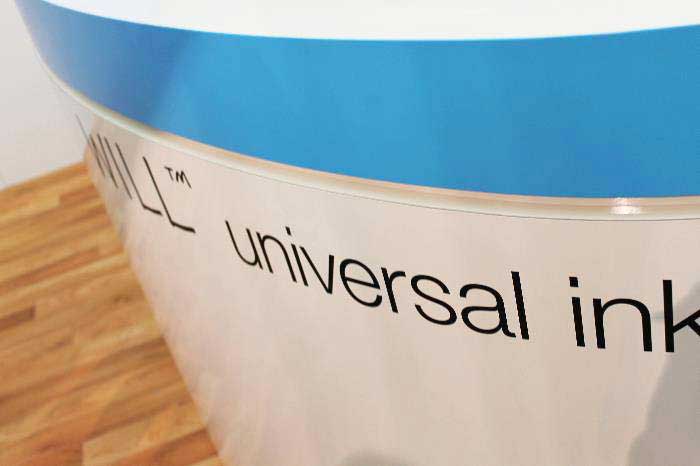
wacomuniversalink-1

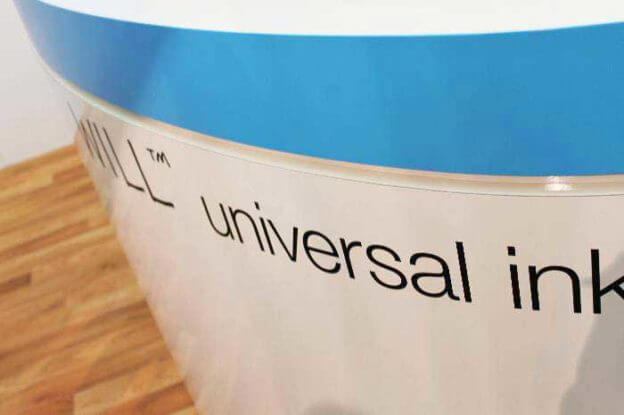
At Wacom’s universal ink spot at CES. Photo: Tablets for Artists

This new effort coincides with a push by Wacom in the digital-inking space. Wacom showed off its inking initiative during the Consumer Electronics Show (CES) earlier this year with these funky digital crayons, each with a unique ID, that allow worldwide collaboration with consistent colors. (These were just for show and I don’t know of any plans by the company to sell them, unfortunately.)

Masahiko Yamada also mentioned digital stationery as a product to develop. The Digital Stationery Consortium began on Jan. 7, 2016 and will be implemented across a range of business sectors.


wacomuniversalink-4

A universal digitizer? This tablet, displayed at CES, allows the use of different types of pen on the same tablet. Photo: Tablets for Artists

I don’t this is going to affect Wacom EMR, which is still used in the Intuos, Cintiq, and some tablet PCs. Please check our post categories to see which tablets we’ve reviewed have which type of digitizer.

The word “universal” is music to my ears. It’s just so much easier. Chargers, pens, and other accessories are so much more accessible when you don’t need a different one for every device.

A reminder: the free upgrade to Windows 10 is ending on July 29, 2016, and some of these changes are going to be included in the next Win10 update, so if you’re holding back, you might want to take the plunge to Windows 10.

With this announcement of a Microsoft-Wacom pen pal pact, it looks like late 2016 has holiday cheer in store for digital artists.

end of Wacom and Microsoft: Pen pals at last


art tablet infographic excerpt

Infographic: The five types of drawing tablet

The Five Types of Drawing Tablet

Here is an infographic depicting the five types of art tablet–graphics, 2-in-1, slate, convertible, and tablet monitor. Below is more info as well as an embed code if you would like to share the infographic on your site or blog. Also below it is a pin if you would like a Pinterest-sized pin to share.

5 types of drawing tablet

By art tablet, we mean tablets with pressure sensitivity and palm rejection, making them suited for drawing, painting, and handwriting.

For an introductory article about art tablets, please see this post.

Please share by using the social media buttons. To put this infographic your site, please use this embed code:

<a href=”http://www.tabletsforartists.com/infographic_art_tablet/”><img src=”http://www.tabletsforartists.com/wp-content/uploads/2016/05/artabletinfographic-2.jpg” border=”0″ /></a>

An example of a graphics tablet would be a Huion 610 Pro or Wacom Intuos. An example of a slate tablet is the Galaxy Tab A with S Pen or an iPad Pro. A Lenovo ThinkPad Yoga 14 is a convertible tablet. The TabPro S and Surface Pro 4 are 2-in-1s. A tablet monitor would be the XP Pen 22 or the Cintiq 13HD.

Pinterest Pin:

5pentabletspin

vector 10 colors

Vector vs. raster for noobs

For newbies: vector vs. raster files

If you’re new to digital art, you may have heard these terms, but perhaps you don’t quite understand, or know which to use when. Here’s a rundown of the differences between these two image types.

RASTER

Raster images, also called bitmap images or raster graphics, are made up of pixels. Most freehand drawing programs utilize raster, though some use vector too. Photographs, once scanned and digitized, or coming from a digital camera, are raster.

raster image

Raster image: photo of lotus

Pixels are tiny squares expressed in points per inch, also called dots per inch (ppi or dpi). Each pixel can be edited. Using Photoshop or another image editor, you can zoom in and see an individual pixel.

To understand pixels, think of a Chuck Close portrait, made of tiny little squares whose edges are invisible unless seen very close up. To see pixels, you need to zoom way in.

A 6″ x 6″ image at 300 dpi is is 1800 x 1800px or 324,000,000 million pixels! That’s a lot of information. A computer can handle that with no problem.

Early computer games were made with pixel art, which has a pleasing, toylike look whose popularity has resurfaced in films like Wreck-it Ralph.

Online images are usually 72ppi (often called dpi–though the terms are used interchangeably, there is some difference in meaning, but people know this and will understand). Print images usually use 300ppi. A very high-res image might be 600ppi.

Raster images cannot be enlarged without losing some information, resulting in fuzzy, “pixelated” images. Large, high-res images can slow down your computer, especially when you use a lot of layers in your drawing program. Despite the inconveniences, drawing freehand using raster graphics feels more similar to drawing on paper than drawing in vector does.

Raster image file types (this is not all of them but the main ones):
jpg (jpeg), gif, png, psd, tiff

Raster programs include Photoshop, Sketchbook, Gimp.

(See our introductory article about art tablets)

Uses of raster files

Photographs and digital drawings and paintings are usually raster. Most art online is raster to begin with, or vector art that was rasterized, because browsers don’t display vector files. Scanners output images into raster. The majority of freehand digital illustration is done in raster.

raster digital painting

Digital painting in raster, done in Krita. Image credit: David Revoy / Blender Foundation (Own work) [CC BY 3.0 (http://creativecommons.org/licenses/by/3.0)], via Wikimedia Commons. Page

Pros: Feels and looks like freehand drawing, can edit pixels, not much learning curve to start, most people can open files to view

Cons: large file sizes when in high-res, enlarging images creates pixelation, cannot edit lines.

VECTOR

Vector images are not made of dots. They are made of paths. A computer uses math to create the image you’re drawing as a wireframe.

Vector images can be resized with no loss of information. They can be blown up very large and will look the same. Vector art tends to look smooth, simple and geometric. It can resemble cut paper. Some artists are able to do vector art so that it has as much detail as any other kind, and it doesn’t look simple at all.

When you make vector art, you manipulate points. Vector art lends itself to working with a pen or mouse. It can feel like working in collage, where you create shapes and move them around, combine, or subtract them. When shading, if you zoom in, you will be able to perceive that the gradations of color are actually distinct shapes.

Some vector-based programs: Adobe Illustrator, CorelDraw, Inkscape, Flash, Autocad

Flash is a vector-based animation program. You can use it to draw non-animated art as well.
Autocad is a vector-based drafting program used by architects and engineers.

Many art programs now let you use both vector and raster–for instance, if you’re in Photoshop and need to open an Illustrator file, you open it as a Smart Image. Manga Studio allows you to use both raster and vector.
vector logos

Logos as examples of vector illustrations

What if you’re working with a client who doesn’t understand the difference?

Clients often do not understand the difference. It’s not our jobs as artists to explain it to them, it’s our job understand what they want. I once had a client ask me to do a job requiring detailed images delivered “in vector.” This job involved a lot of freehand drawing, which I do much better at in raster. At first I considered converting my raster images to vector, which would not have worked well.

But then I realized maybe they only meant they wanted art that could be resized easily, and they knew vector art did this. So I asked them if high-res Photoshop (TIFF or JPG) files were OK, and they said yes. Phew! Remember that clients don’t always know the terminology, so keep communication clear.

Raster to vector: Auto-trace

vector image

Image after being “Auto-Traced” and turned into vector

You can “auto-trace” raster images in vector programs such as Adobe Illustrator, meaning convert them to vector, but if you keep all the colors you will end up with a very large file too complex for some uses. If you don’t use all the colors, you will see the edges between the colors with the naked eye. So when printing photos or detailed raster art, it’s better to leave it as raster. Going the opposite way, converting vector to raster, does not change the image much.

vector 10 colors

Vectorized photo reduced to 10 colors
 

Uses of vector files

Most logos and text is created in raster. Fonts can be manipulated in vector. Graphic designers use vector extensively. Illustrators increasingly use vector for even detailed art, as the software becomes more sophisticated.

Some vector file types:
AI, CDR (Corel Draw), sometimes EPS

Pros: Enlargeable, prints well, is possible to do a beautiful illustration without great drawing skills (I do not meant that in a negative way), smaller file size. Can change line width and characteristics after drawing the line.

Cons: Challenging to get much detail, steep learning curve, not everyone can open them to view them.
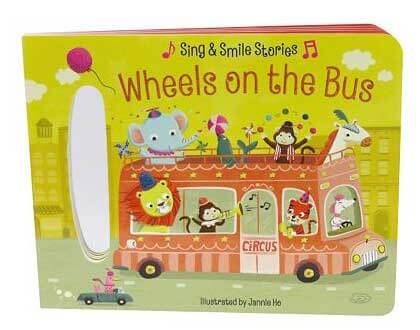
vector-illustration

Vector illustration by artist Jannie Ho. She makes it look almost like raster.

Both file types support layers. Like raster, some vector programs support pressure sensitivity.

Want to try?

If you want to try a free vector and raster programs, Inkscape is a versatile and fun vector program. Gimp is a free raster program often compared to Photoshop. There are free vector and drawing apps for tablets.

You might say that using raster to “paint” and vector to “draw,” or design, unless you’re one of those artists who can make vector look like raster or like traditional media.

Vector and raster images are